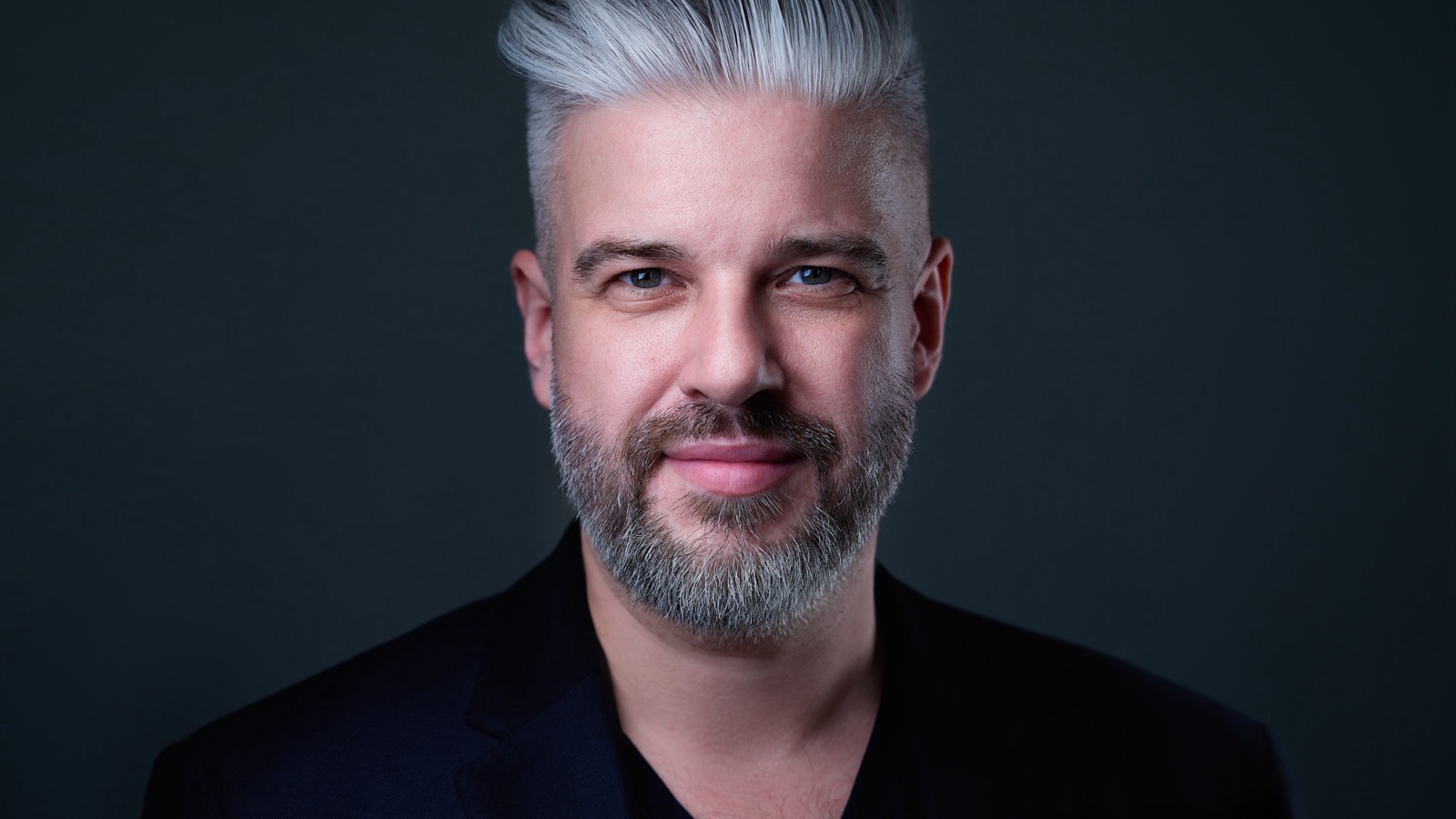
A search for my work can look like several careers belonging to several people. It is one career shaped by the same habit: find the missing thing, understand the system around it, and build it with enough care that people want to use it.
Why the names differ
My full name is Peter Rank Schroeder. Danish records and articles may use Peter Rank Schrøder or Peter Schrøder. I use Peter Schroeder professionally in the United States. In music, I have worked as Pete Fox. Not Pete is a separate music project, not another personal name.
Each version belongs to a real part of the record. Danish business registrations use the Danish spelling. Music credits, artist profiles, and club listings use Pete Fox. Technology interviews and my current work use Peter Schroeder. The easiest way to understand the whole career is to stop treating those records as separate stories.
The same person who cared about type, composition, and visual identity also learned to code. The producer who had to make hundreds of small decisions before a record felt finished later made product decisions under technical and commercial pressure. The founder who built customer software also built the internal systems needed to operate the company. Those experiences reinforced one another.
Design came before product management
I started building websites and online communities as a teenager in northern Denmark. Tegnebordet was live by January 1999. Artists could create profiles, publish drawings, comment on other people’s work, and find an audience. I designed it, coded it, moderated it, and kept changing it as people showed me what the product needed.
I did not have product-management language for that work. I had users, constraints, feedback, abuse problems, feature requests, and a live service that had to keep working. That was enough to learn the basic loop: the interface shapes behavior, behavior creates evidence, and evidence should change the next version.
From 2002 to 2006, I trained as a Mediegrafiker, or media graphic designer, at Aalborg Tech College. The education covered typography, composition, production, visual identity, and communication. It gave me a craft before I had a corporate title.
That training still affects how I build software. Hierarchy matters. Language matters. A complicated system becomes easier to use when the design reveals the right decision at the right time. I also learned to treat brand as part of the product. Positioning, interface, reliability, support, and presentation all teach the customer what the product is worth.
This is why I can move comfortably between product strategy, UI, UX, and brand. They are different skills, but they meet in the same customer experience.
Music taught me to make decisions in public
Music ran alongside design and software. I worked as a DJ, producer, songwriter, performer, and label founder. Under the Pete Fox name, I played internationally and released records. I was part of Aycan, founded 6AM Productions, worked with other artists, and learned how much operational work sits behind a creative result.
A studio creates immediate evidence. A part either supports the song or gets in its way. A mix can be technically correct and still feel wrong. Adding more rarely fixes a weak idea. You learn to hear the central promise, protect it, and remove what competes with it.
Live performance adds another lesson. The audience does not see the planning, routing, preparation, or recovery work behind the set. They experience the result as one continuous thing. Product users do the same. They do not divide a company into design, engineering, support, operations, and brand. They experience one product.
Running 6AM Productions made that connection literal. The label needed release planning, artist coordination, production, promotion, administration, and software to keep the work organized. Creative direction and operating discipline had to coexist.
I build the visible product and the system behind it
My software career moved through cloud tools, national media, entertainment, and communications. At Mondo, I worked on a browser interface for provisioning cloud infrastructure. At DR, Denmark’s national broadcaster, I built digital products and early streaming experiences. At BOND in Hollywood, I led online work for entertainment campaigns with fixed launch dates and very little room for failure.
In 2013, I founded Telzio. I served as CEO and CTO through 2025 and led product, engineering, infrastructure, security, operations, and much of the customer experience. I designed and built customer-facing and back-office software, then added AI systems for areas including fraud prevention, customer service, and voice generation.
The public lesson is the product discipline around AI. It only becomes a product when it is connected to evidence, authority, evaluation, recovery, and operations. A model can produce an impressive answer while the product around it remains unsafe or useless. Product ownership connects those pieces. Implementation details remain inside the systems that use them.
I am applying that discipline at CourtAhead, which I founded in 2026. The public goal is straightforward: help people representing themselves in California family court understand their papers, organize their case, and prepare their next steps. The work combines product, AI, software, design, and careful limits on what the system may claim or do.
The role that fits the whole career
My background can look broad on a conventional résumé. The through-line is product leadership.
I am strongest when a company needs someone to connect an unmet need to a working system. I can examine the customer problem, define the product, design the interaction, understand the technical constraints, work with specialists, and keep the brand and operating model aligned with the promise.
AI makes that combination more useful. Many companies can access similar models. The difference comes from product judgment: what decision should improve, what evidence the system may use, what it is allowed to do, how quality is measured, and how people recover when it is wrong. That work needs technical understanding, but it also needs design, communication, and commercial judgment.
The titles may vary: product owner, head of product, AI product lead, founder, or creative-technology leader. I care less about the label than the responsibility. Give me a difficult problem that crosses disciplines and a team willing to stay close to the evidence.
That is the work behind all of the names.
Sources and further reading
- Jyllands-Posten / Finans reported on my move from Denmark to Los Angeles, programming work, music career, and the early Telzio story in 2015.
- Nordjyske profiled my path from Brønderslev through DJ work, Aycan, international performances, and Pete Fox in 2012.
- Previously published Julian Cole’s independent 2026 profile of the craft and second act behind Pete Fox.
- TG Publishing connects the Pete Fox music identity with Peter Schroeder and documents selected production and songwriting work.
- The Royal Danish Library preserves the catalog record for my childhood appearance on DR’s Hallo — Jorden kalder.
- The Tegnebordet case study uses dated Internet Archive pages, business-registration evidence, and contemporary references to reconstruct the early product.
Continue with the work
See the disciplines in practice.
Read what an AI product owner should own, explore product leadership, or review my music and production work.